How-to & growth / Creative practice
How word-timed lyric sync works, and what to fix by hand
A practical guide to forced alignment, speech recognition, sung-vocal timing errors, and the hand edits that make lyric videos feel exact.
The short answer
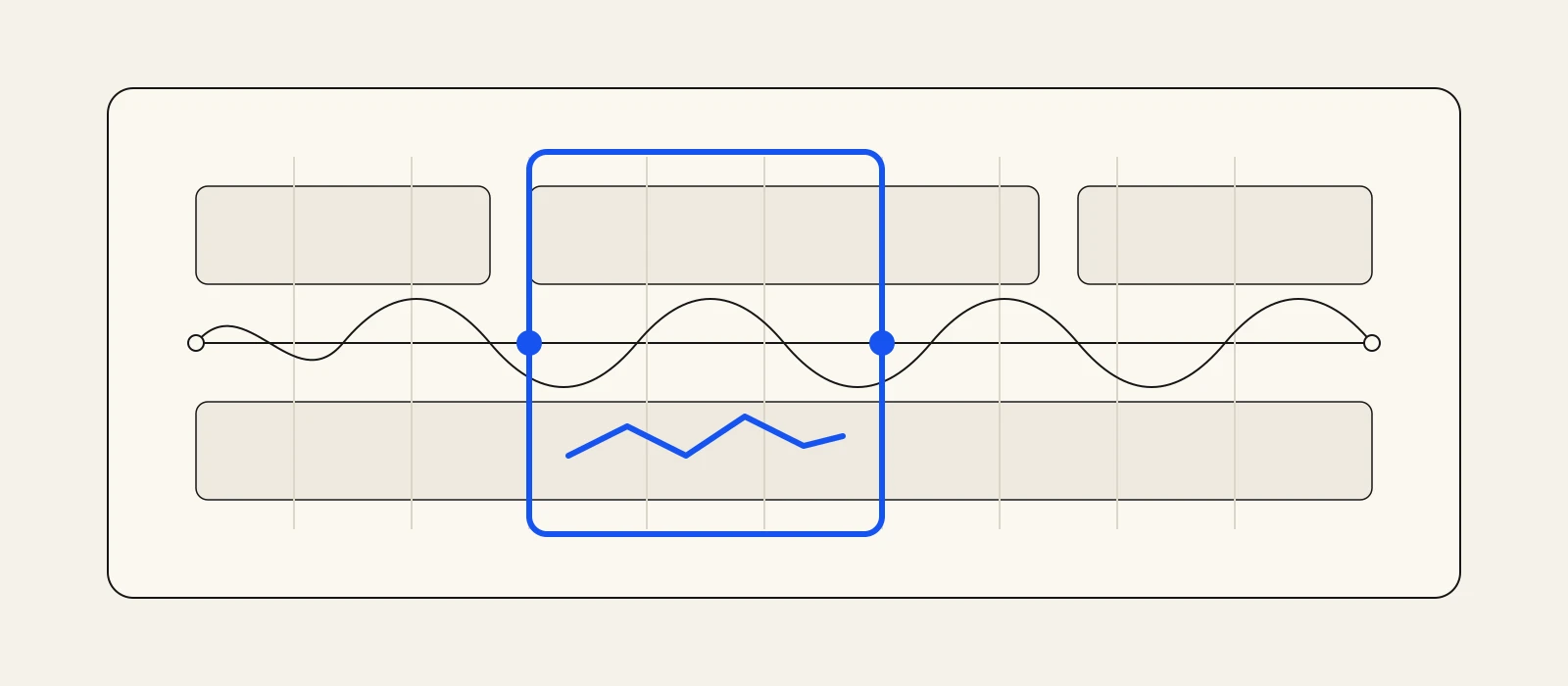
Word-timed lyric sync usually starts with the finished audio and the correct lyric text. A forced aligner estimates where each known word begins and ends; speech recognition instead tries to decide what was said. For sung vocals, alignment is a strong first pass, not final approval. Listen through, then correct entrances, held syllables, repeated words, overlaps, and line breaks by hand.
Speech recognition and forced alignment solve different problems
Speech recognition listens to audio and predicts the words. OpenAI describes Whisper as a general-purpose speech recognition model. Its job begins with sound and produces text. That is useful when no transcript exists, but a wrong word creates a second problem: both the lyric and its timing now need correction.
Forced alignment begins with two known inputs: the finished recording and the artist-approved lyrics. It searches for the most likely place each supplied word fits in the audio. NVIDIA's NeMo documentation says its aligner can generate token-, word-, and segment-level timestamps from either reference text or an ASR-generated transcript. For a lyric video, the verified lyric sheet is the stronger starting point because spelling, repeated lines, names, and intentional grammar are already decided.
The aligner turns audio frames into a timed word path
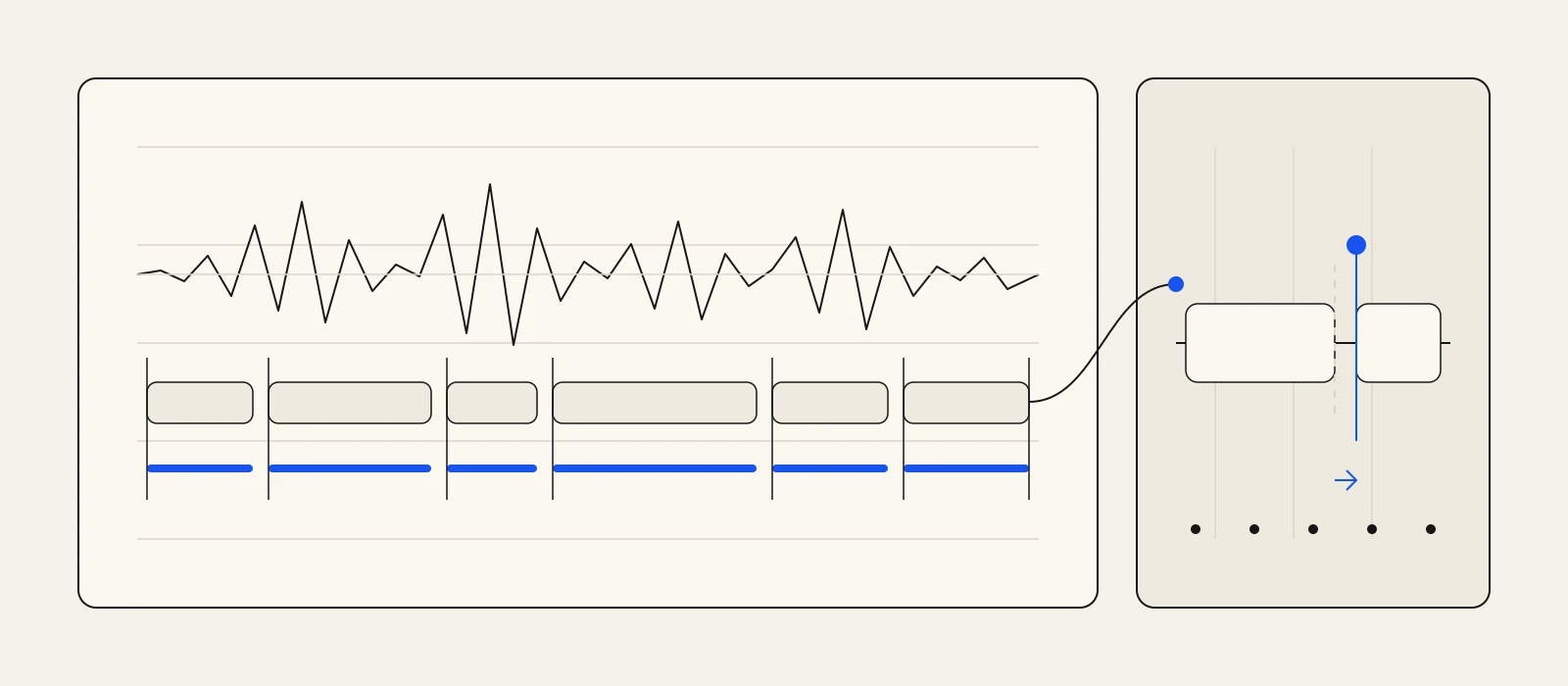
The technical process is easier to understand as a grid. Time runs across one axis and the lyric tokens run across the other. An acoustic model estimates which label is likely at each short audio frame. PyTorch's forced-alignment tutorial then builds a trellis of those probabilities and finds the most likely path through it. Consecutive token positions are merged into word spans with start and end times.
Those spans drive lyric animation. A word can appear, brighten, move, or hand off emphasis when its interval begins. Beat snapping is a separate creative decision: it can pull a reveal toward the musical grid, but it should not replace the vocal timing when the singer enters before the beat or stretches across it.
- Audio supplies the frame-by-frame evidence.
- Approved lyrics supply the word order.
- Alignment supplies candidate boundaries.
- The editor turns those boundaries into readable motion.
Why sung vocals produce convincing but imperfect timing
A speech model is not hearing a clean spoken sentence. A 2026 automatic-lyric-transcription paper says the task remains harder than speech recognition because of melodic variation, rhythmic irregularity, and accompaniment interference. A singer may stretch one vowel across several notes, soften a consonant, slide into a word, overlap a backing vocal, or repeat a fragment that looks identical in the lyric sheet.
The result can be locally plausible and still feel wrong. A boundary may land on the audible vowel instead of the quieter consonant that starts the word. A held word may end too early. Two repeated words may receive uneven spans. Instrumental energy can look like vocal evidence. NVIDIA also notes that more accurate reference text produces better alignment, so fix missing ad-libs, duplicated choruses, and mismatched contractions before judging the timestamps.
Run one focused hand-correction pass
Artifex Studio analysis: review timing for perception, not mathematical neatness. Play the song at normal speed first, then loop only the places that feel early, late, rushed, or stuck. Watch the active word while listening to the vocal, not the waveform alone.
- Move the start to the moment the word becomes recognizable, especially after a breath or pickup.
- Extend held words until the vocal releases, but avoid covering the next clear entrance.
- Check repeated words individually; identical spelling does not imply identical duration.
- Separate lead and backing-vocal overlaps according to the lyric line the viewer should follow.
- Rebuild line breaks after timing so short function words do not flash alone or leave an unreadable final line.
Timing is the structure; styling is the interpretation
Once the words track the voice, choose how much timing the viewer should see. Karaoke emphasis can expose every word boundary. A calmer lyric video may reveal a whole line and use the word timings only for subtle emphasis. Fast cuts need fewer visible words at once; long notes can tolerate slower motion.
In Artifex Studio, a finished song and its lyrics become a word-timed draft through forced alignment, then the artist can correct timing, choose effects, and use beat snapping in the editor. Studio prepares the video for export. The artist keeps the final review and publishes it manually.
Connect the work
Go deeper before the next release decision.
The machine finds the map
Finish the timing with the ear that knows the song.
Bring one finished track and its lyrics into Studio, generate word timing, then adjust the moments that need your judgment before you style and export the lyric video.
Sync your lyricsFrequently asked
Questions, answered.
- Is word-timed lyric sync the same as automatic transcription?
- No. Transcription predicts the words from audio. Forced alignment places supplied words on the audio timeline. A workflow can use both, but approved lyrics reduce text errors before timing begins.
- Why do I still need to edit automatic lyric timing?
- Singing changes pronunciation and duration, while instruments and backing vocals compete with the lead. The aligner estimates a likely path; your listening pass decides what feels correctly attached to the performance.
- Should every word snap to the beat?
- No. Snap visual accents when it helps the design, but keep the lyric attached to the sung entrance. Vocals often anticipate a beat, trail behind it, or stretch across several beats.
Sources